
The $25k+ surprise: addressing cloud cost overruns and protecting profitability
AWS and Azure budgets that start at $5k a month routinely become $25k to $35k a month within two years. Only 20 percent of those increases are justified by growth.
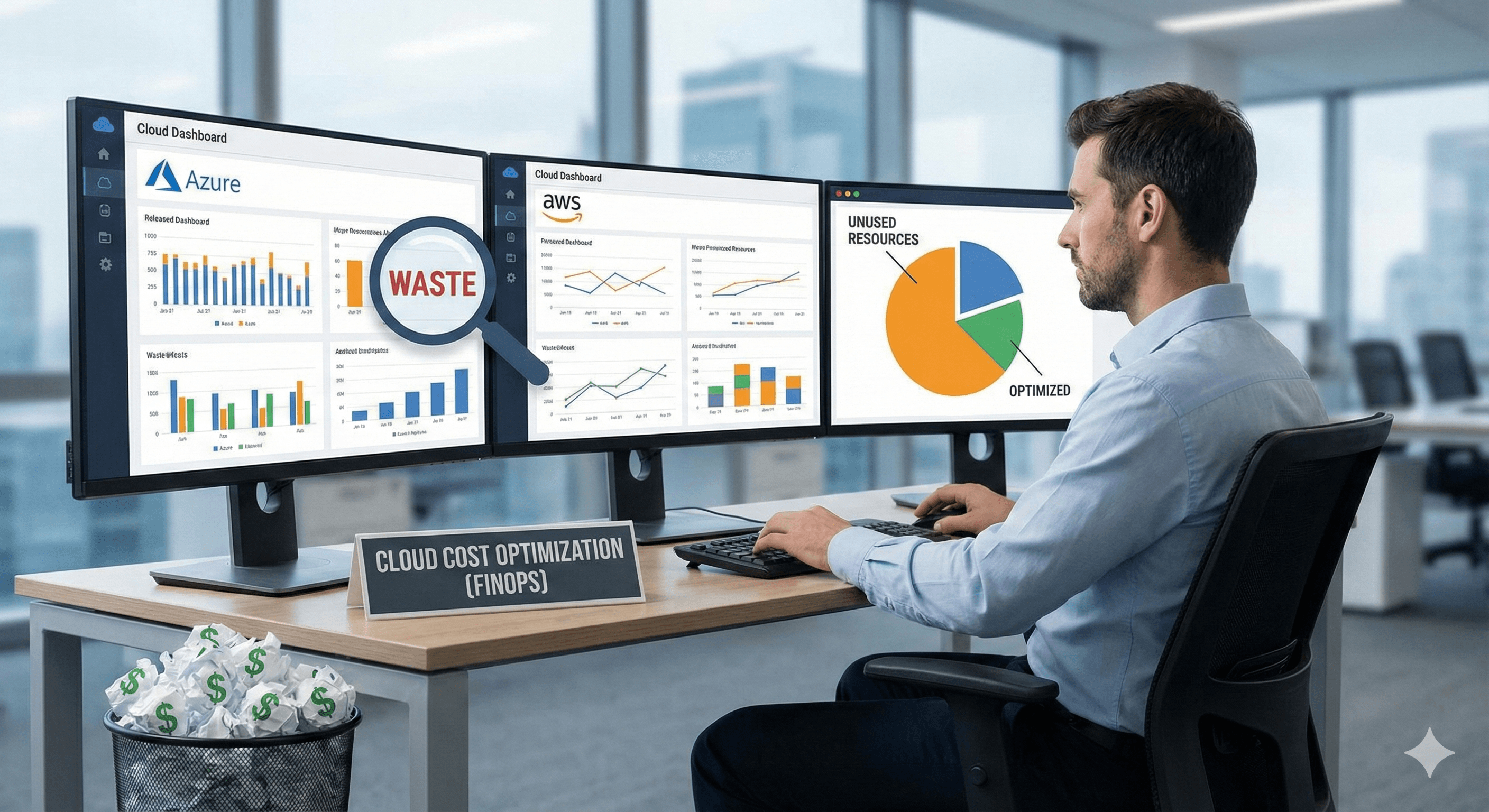
Cloud infrastructure, particularly AWS and Azure, is the backbone of modern software companies. The tooling, scalability and speed are real. For many CIOs and business owners, those same platforms have quietly become a major source of unnecessary expense.
Working with Australian businesses from startups to large enterprises, I see the same pattern. Solutions initially budgeted at $5,000 to $10,000 per month routinely escalate to $25,000 to $35,000 or more within two years. In reality, only about 20 percent of those businesses experience growth that genuinely justifies the increased cost. For the remaining 80 percent, the additional spend reflects inefficiency, not scale.
The anatomy of the trap
This rarely results from a single bad decision. It develops through gradual increases in complexity.
AWS and Azure provide robust toolsets that teams adopt quickly. As systems mature, tools that were essential in year one may become obsolete by year three, yet they remain in production. Often it's because of a minor dependency, or a legacy application no one wants to touch.
Removing outdated tools triggers a risk calculus:
- The migration cost. Is it worth the engineering hours to move off?
- The opportunity cost. Pulling top developers from feature work to fix infrastructure plumbing is a poor use of capacity.
The result is decision paralysis. Outdated infrastructure stays. Costs increase. Inefficiency accumulates.
The hidden costs: morale and customers
Infrastructure sprawl shows up in two more places that don't appear on the AWS bill.
The morale tax
Technical staff inherit this management debt. They face ongoing pressure to maintain or reduce costs on systems they did not design and cannot easily refactor. That's the fastest way to burn out the people you can least afford to lose.
The customer tax
Excessive infrastructure costs often get passed on to customers to protect margin. In a competitive market, losing customers because your backend is inefficient is a strategic risk, not just an operational one.
The fix: governance, not just engineering
Addressing this is not purely a technical problem. It's a governance challenge.
Scenario A: launching clean (the prevention)
If you are launching a new product or feature, avoid trial-and-error.
- Architecture planning. Develop a clear plan for both product and data modelling.
- Load testing. Spend the time and money to create realistic load test scenarios. Real-world load is hard to simulate, especially in the AI and CUDA-simulation world. It is also achievable to a near-real degree if you commit to it.
- Sample usage forecasting. If costs increase disproportionately to user growth, that's an architectural inefficiency, not a scaling story.
Scenario B: already in the bracket (the cure)
If you're staring at a $35k bill and wondering where the money went, you need a full audit.
Don't divert your primary team from their core responsibilities to do it. Having your core product team audit their own legacy infrastructure creates conflicts of interest and pulls them off revenue-generating work. An objective external review of software, services and providers is required. The audit should identify:
- Zombie infrastructure (resources running but not actually used).
- Over-provisioned instances (paying for headroom you never use).
- Legacy tools that can be deprecated entirely.
How Artrilogic supports your business
Handling the challenges of mature cloud setups requires a perspective that isn't bogged down in daily feature delivery. At Artrilogic we engage with CIOs and business leaders to break decision paralysis. We help you work through complicated AWS and Azure setups, providing the objective stock-take your business needs without distracting your internal resources from top-priority work.
Whether you're addressing cost overruns or planning scalable architecture for a new product, we help ensure your technology investments deliver value. Contact us to discuss how we can optimise your infrastructure.