
Beyond the hype: why your AI strategy should start with a system audit
Plugging AI into aging, fragmented infrastructure creates more problems than it solves. Start with what's already running.
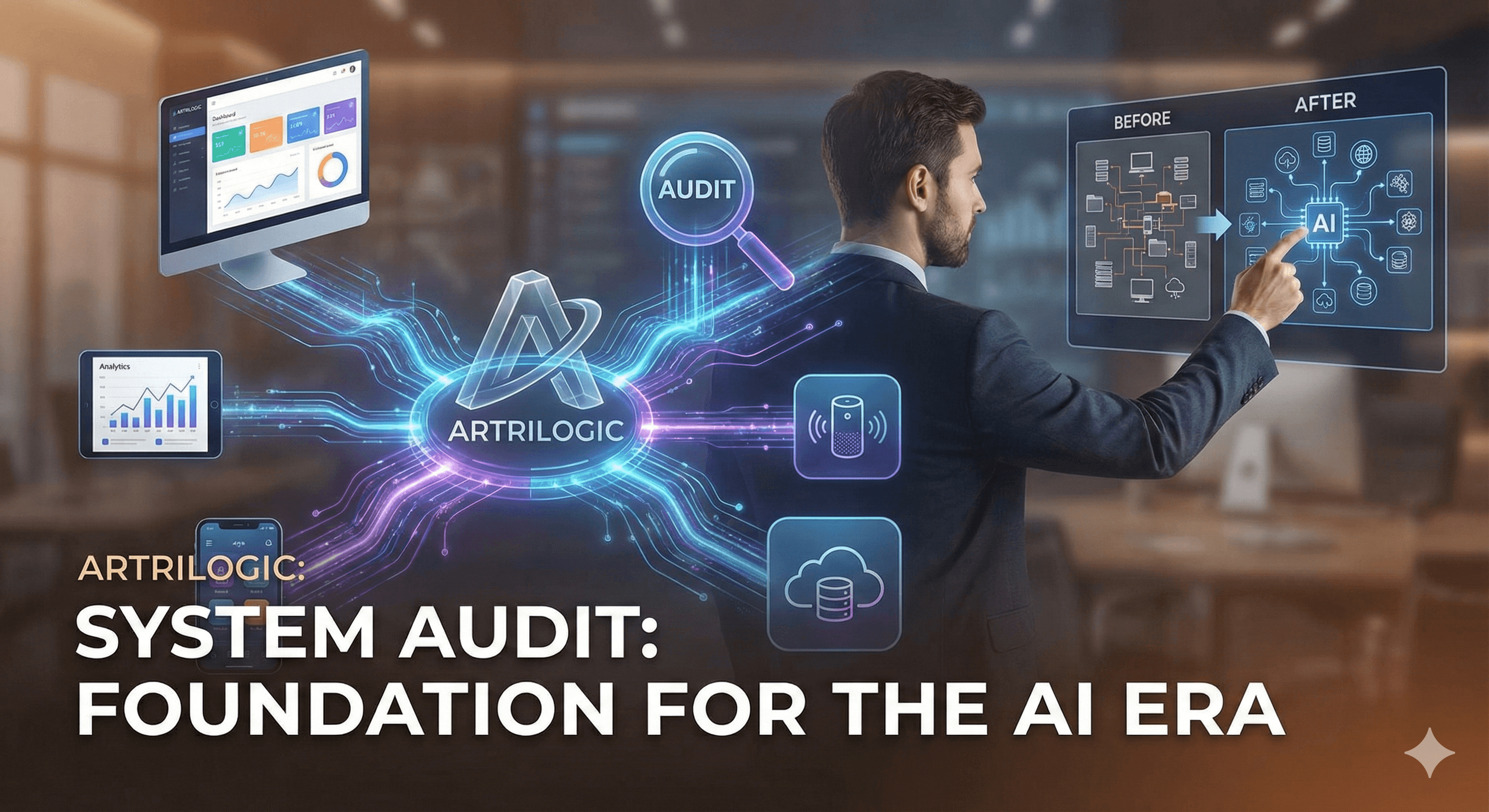
Everyone feels compelled to "do something with AI." Before adopting new tools or shipping yet another application, business leaders should pause and answer a different question: what already exists, and what is it actually doing?
This article is about why integrating AI into aging, fragmented infrastructure creates significant complications, and why a thorough system assessment grounded in business priorities (not trendy technology) is the foundation of AI readiness.
What problem are you actually trying to solve?
In a recent consultation with a rental management firm, the request was "an app for our rental application review and selection process." A few questions in, the more useful question emerged: "How can we improve the rental application and review process?"
That distinction matters. The first question presumes technology is the answer. The second prioritises the desired outcome. In a saturated marketplace, launching another app isn't necessarily helpful. Success requires examining your organisational mission and identifying how systems can enable expansion.
The paradigm shift: from redundancy to morphing
Many organisations worry that AI will render their current infrastructure obsolete. The historical evidence says systems gradually transform rather than disappear.
- Mainframes provided computational capacity but required fixed infrastructure.
- Desktop computing distributed power to individual workstations without mobility.
- Web and mobile reintroduced distributed models while enabling remote access.
- AI is transforming delivery methods, positioning conversational interfaces as a primary interaction channel.
The return of voice
Voice technology tried to expand before and was limited by hardware and simplistic command structures. Contemporary AI removes those limits by improving the underlying intelligence. The forthcoming transformation is about establishing accessibility across multiple channels (particularly natural dialogue) rather than building another standalone application.
The silent issue: too many apps
System fragmentation is the genuine challenge for business leaders today, not a shortage of technological options.
Users are exhausted by app proliferation. They resist downloading large files, creating additional credentials, or confirming additional contact details just to engage with an organisation. They expect streamlined, intuitive experiences.
Organisations need to position themselves as either:
- The Authority. The primary information source that other systems integrate with.
- The Super Consumer. A strategic combination of AI platforms that delivers customers a simplified, effortless experience.
A 5-to-10 year system review framework
Decade-old core systems aren't necessarily obsolete, but they often operate as isolated environments. Implementing AI requires a comprehensive evaluation that goes beyond a standard health check.
1. Data accessibility (the pipeline)
AI implementation demands extensive data availability. When information is locked inside outdated systems, the assessment determines whether your authoritative data repository exists and whether integration through APIs is viable.
2. Workflow mapping versus app thinking
A comprehensive process evaluation identifies manual transitions and performance gaps. Automation succeeds when procedures are transparent and well-defined. Undocumented workflows prevent effective automation.
3. Channel readiness
Evaluate the current systems for compatibility with voice interactions and management across web, messaging, and mobile notifications. The objective is enabling systems to function across diverse channels, not just retaining data.
A grounded roadmap to transformation
Complete system replacement isn't the answer. Phased progression is.
- Phase 1: audit (weeks 1 to 3). Evaluate technical debt and find immediate automation possibilities.
- Phase 2: stabilisation (months 1 to 3). Improve information quality and system connectivity to establish solid groundwork.
- Phase 3: AI integration (month 3+). Once the foundation is in place, layer in AI capabilities such as predictive analytics, automated applicant evaluation, or voice-controlled dashboards.
The bottom line
The genuine concern with AI isn't workforce displacement. It's falling behind organisations that have superior system integration and operational efficiency. A system assessment is an acceleration strategy, not a setback. Don't build apps to follow trends. Build infrastructure that shields your business from future disruption.
If you'd like to walk through what a system audit looks like for your business, book a consultation.